|
By Dr. Radwan Masmoudi Founder and President of the Center for the Study of Islam & Democracy (CSID)
Few political labels have been stretched as carelessly as “Islamist.” It now refers, indiscriminately, to democratic reformers and violent extremists alike. Used this way, the word has lost analytical value and gained political harm. It obscures reality and unfairly stains millions of Muslims who believe deeply in both faith and democracy.
I reject that label. I am a Muslim Democrat, not an Islamist. The distinction is not cosmetic. It goes to the heart of how religion and power relate to one another.
A Muslim Democrat draws moral guidance from faith while firmly defending pluralism, equal citizenship, and constitutional democracy. An Islamist seeks to make religion itself the organizing principle of the state. One treats faith as a source of ethical inspiration. The other turns it into an instrument of political authority.
Faith should shape conscience, not command power. The Qur’an speaks repeatedly of justice, mercy, and human dignity, values that align naturally with democratic principles. The Prophet Muhammad’s Charter of Medina offers an early example of civic pluralism: a political community built on shared rights and responsibilities among Muslims, Jews, and other groups, grounded in consultation and consent rather than religious domination.
Modern Islamism emerged in the twentieth century as a response to colonialism and authoritarian rule. While it promised moral renewal, it too often collapsed faith into ideology. When religion becomes the basis of state power, dissent is easily recast as heresy, and accountability disappears.
Muslim Democracy offers a different path. It affirms that Muslims can participate fully in public life without imposing belief on others. It insists on a civil state that remains neutral among religions and protects freedom of conscience for all. Islamic ethics may inform personal political choices, but they must never override democratic institutions or individual rights.
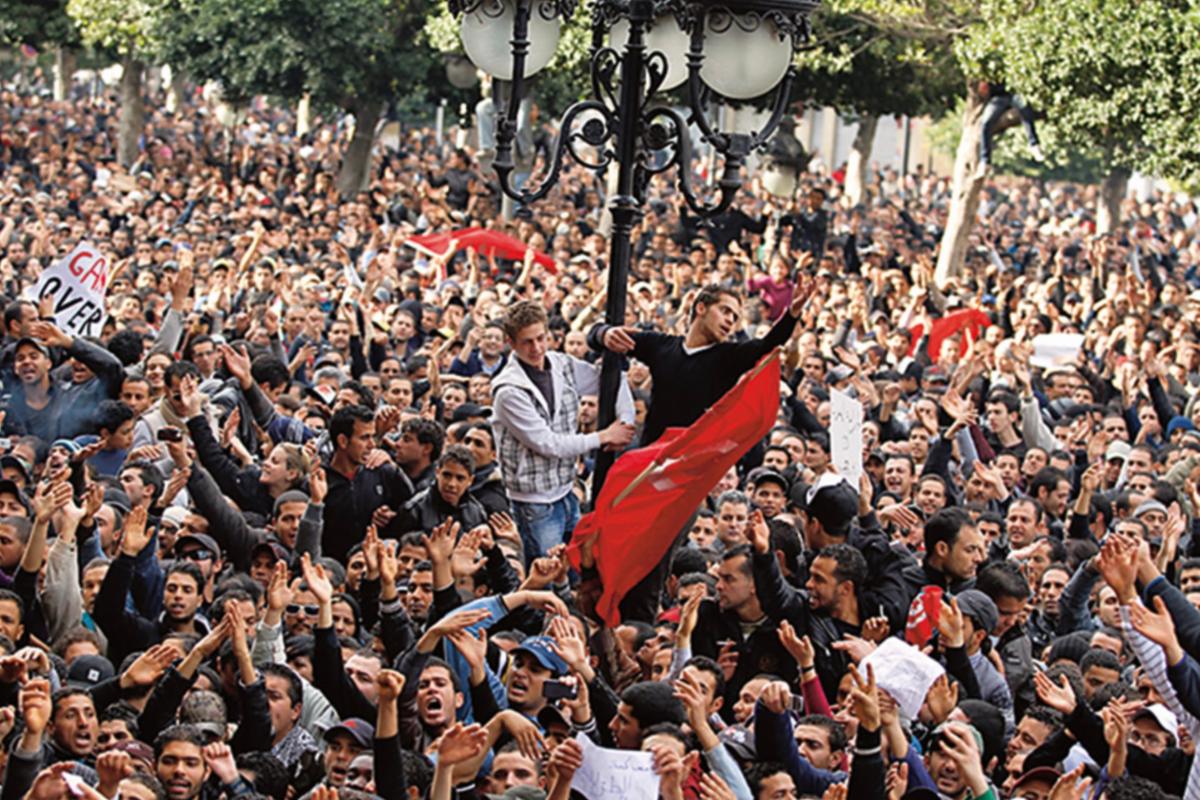
Tunisia after 2011 offered the clearest modern expression of this vision. Following the fall of dictatorship, Tunisians produced one of the most progressive constitutions in the Arab world. Secular and religious actors debated openly, compromised, and governed together. Ennahdha, long labeled Islamist, deliberately redefined itself as a party of Muslim Democrats, separating religious activity from political work and affirming the principle of a civil state.
For nearly a decade, Tunisia demonstrated that Islam and democracy are not incompatible. Its institutions were fragile and imperfect, but they were real: competitive elections, a free press, independent courts, and women in leadership. Democratic governance emerged through consensus, not coercion. History offers a revealing parallel. After World War II, Christian Democratic movements in Europe reconciled religious ethics with liberal democracy. Their commitment to human dignity, solidarity, and social responsibility helped rebuild Germany and Italy and anchor Europe’s postwar democratic order. Faith did not weaken democracy. It helped sustain it.
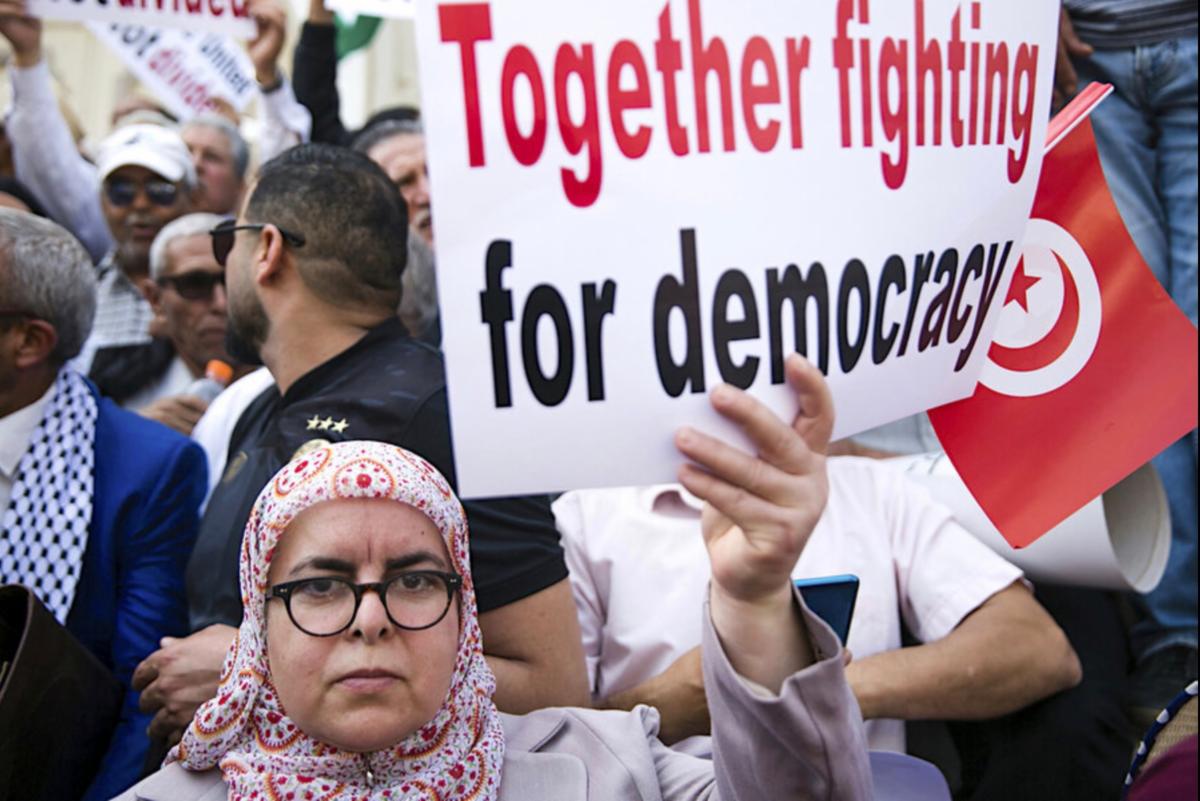
Even as Tunisia today faces a troubling return to authoritarian rule, the legacy of its democratic decade endures. Civil society actors, journalists, and ordinary citizens continue to defend their freedoms peacefully. Tunisia remains proof that Muslim Democracy is not theoretical. It has been practiced, tested, and, for a time, it worked.
The cost of abandoning this path is visible today. From Gaza to Sudan, from Syria to Yemen, and now again in Tunisia, the collapse of accountable governance has brought devastation, mass displacement, and endless instability. These crises are not failures of faith. They are failures of authoritarian rule. This distinction matters deeply for Muslims in the West as well. Too often, any Muslim who speaks publicly from faith is branded an Islamist. Christians and Jews enter politics guided by moral conviction without being reduced to caricatures. Muslim Democrat names what we actually stand for, democracy grounded in values, not theology enforced by law.
This is not a semantic debate. It is a question of identity and principle. A Muslim Democrat believes democracy itself fulfills a moral obligation to protect human freedom and dignity. Faith without freedom invites hypocrisy. Power without accountability produces tyranny.
At its core, democracy is not merely a procedural system. It is the political order best suited to protect human rights, equality, and human dignity, and to translate those values into lasting peace, development, and genuine stability. Societies governed through consent, accountability, and the rule of law are far less prone to violence and far more capable of resolving conflict without coercion.
The opposite is equally clear. Dictatorships, whether secular or religious, do not produce stability. They manufacture it temporarily through fear, then destroy it through repression. Across the Middle East and beyond, authoritarian rule has hollowed out institutions, crushed civic life, and fueled cycles of violence, radicalism, and extremism. When citizens are denied peaceful avenues for participation, anger finds expression elsewhere, often in destructive forms.
From an Islamic perspective, democracy is not a foreign imposition but the political system most consistent with Islam’s moral vision and with universal principles of human rights. Equality before the law, freedom of expression, freedom of thought, justice, and peace are not Western values. They are human values, deeply embedded in Islamic ethics. Any political order that suppresses these principles in the name of religion betrays both religion and humanity.
The Qur’an is unequivocal on this point: “There is no compulsion in religion.” Faith loses its meaning when imposed by force. Religion cannot and should never be coerced by the state, whether through law, intimidation, or social pressure. Belief is valid only when it is freely chosen, and a political system that polices conscience undermines the very faith it claims to defend.
A civil democratic state rests on a simple but powerful principle: government must be from the people, by the people, and for the people. All citizens must enjoy equal rights and bear equal responsibilities under the law, regardless of religion, ideology, or identity. Political legitimacy flows from the consent of the governed, not from claims of divine authority or ideological purity.
Across the Muslim world, the central struggle is not between Islam and secularism. It is between democracy and despotism. Muslim Democracy charts a middle path, one in which faith enriches public life without monopolizing it, and governments serve citizens rather than control belief.
That is why I call myself a Muslim Democrat. My faith is my compass. Democracy is my home. And the example once offered by Tunisia, of Muslims governing themselves through dialogue, tolerance, and freedom, remains the clearest guide to a more just and stable future.
|
|